Your Professional Trekking Services
Cross the iconic Masaba Table at 4,020m, summit Masaba Peak at 4,152m and stand on Wagagai — Uganda's highest point at 4,321m — via the new Sasa Trail.
Overview
In accordance with UIAA (International Climbing and Mountaineering Federation) recommendations, we do not recommend a three-day trek to Wagagai Peak at 4,321m. Day 1 of this itinerary involves an altitude gain of approximately 2,025 metres in a single day — three times the internationally recognised safe limit. Altitude does not recognise fitness; your body needs time to adjust to reduced atmospheric pressure and lower oxygen levels. Rushing this ascent can result in severe headaches, difficult breathing, nausea, and in rare cases, serious illness.
We strongly recommend our 4 Day Trek which includes an intermediate overnight at Hunwick's Camp, giving your body the acclimatisation it needs. The three-day option is available for those who understand and accept these risks. The choice is yours.
This is the most challenging version of the Sasa Trail summit experience — two peaks, two nights, and one extraordinary Day 1 that takes you from the coffee plantations of Bugiboni all the way to Masaba Camp at 3,745 metres in a single long push. You pass the thundering Nabunyifu Falls, cross the Dirigana Valley through primeval montane forest, stop for lunch at Hunwick's Camp (2,882m), then continue through the Giant Heather Zone to reach Masaba Camp.
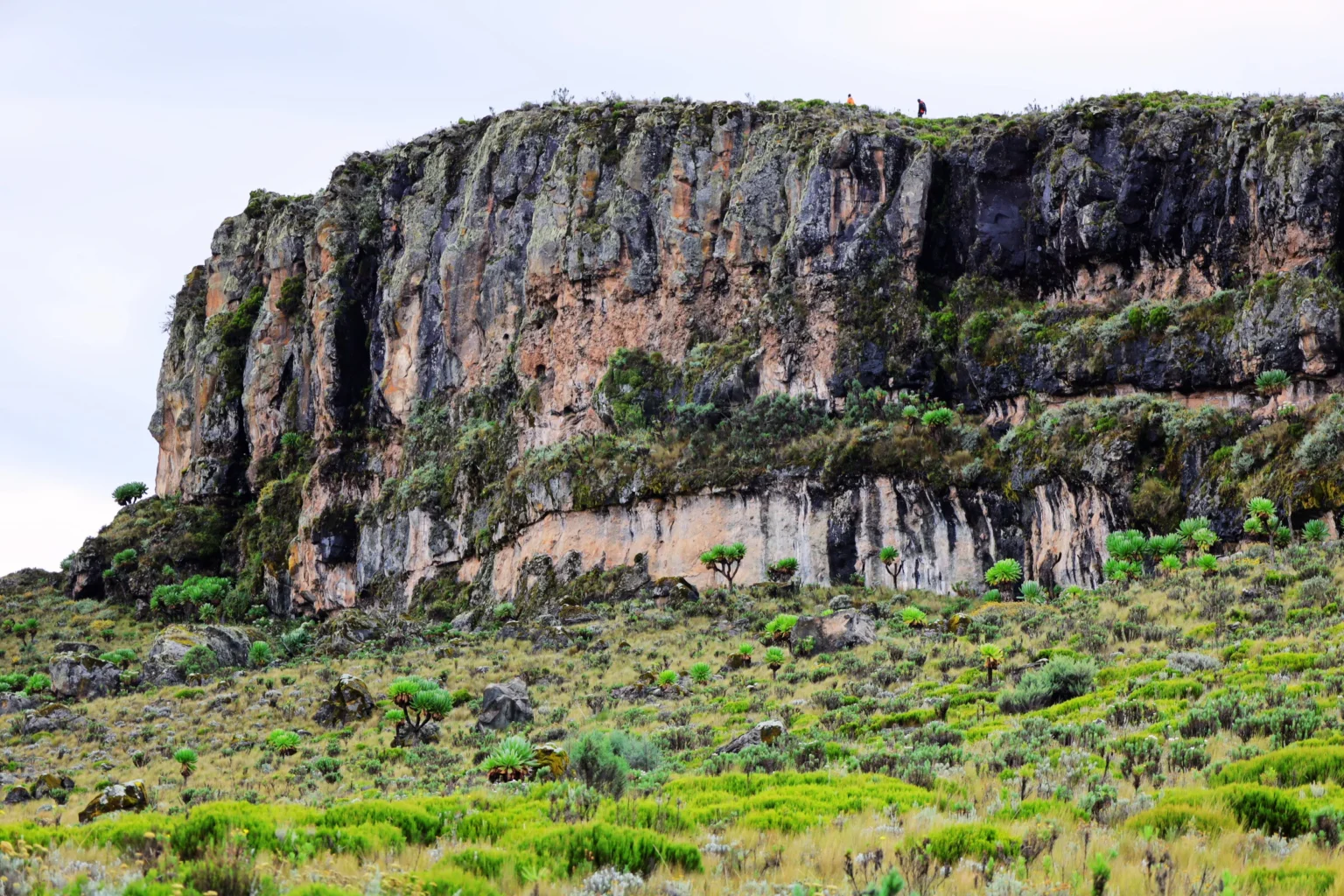
Day 2 is the summit day: walk the full length of Masaba Table, the 700m × 200m flat-topped rock rising 80–100m above the surrounding moorland, with cliffs on all sides. From the table, the trail hugs the caldera rim to Wagagai Peak at 4,321m — Uganda's highest point. An optional side trip to Masaba Summit at 4,152m adds one of Mt Elgon's most dramatic viewpoints to your journey. The descent to Sasa River Camp or Mude Cave Camp completes one of East Africa's most rewarding summit days.
Day 3 descends through the montane forest back to basecamp, where most trekkers arrive by noon if sleeping at Sasa River Camp, or by 3pm if overnighting at Mude Cave.
Day by Day
Three intense and rewarding days on the Sasa Trail — from coffee plantations to alpine moorland, across an ancient volcanic table, to the summit of Uganda's roof of the world.
An early 8:00am start at ETS Basecamp (1,720m) is essential — Day 1 is long. The trail climbs immediately through coffee plantations, maize fields, and onion terraces, past Lusag Kigoma Primary School, then up to the park boundary below the 61m Nabunyifu Falls (meaning "cold wind"), flanked by sheer cliffs. The newly constructed switchbacks offer stunning views back over the community and distant mountains on a trail never before accessible to tourists.
Crossing into montane forest, the path follows the Dirigana Valley through giant Podocarpus trees and dense vegetation, crossing the river at a lunch shelter. From here a steady climb brings you to Hunwick's Camp (2,882m) — a welcome rest stop where you refuel before tackling the upper mountain.
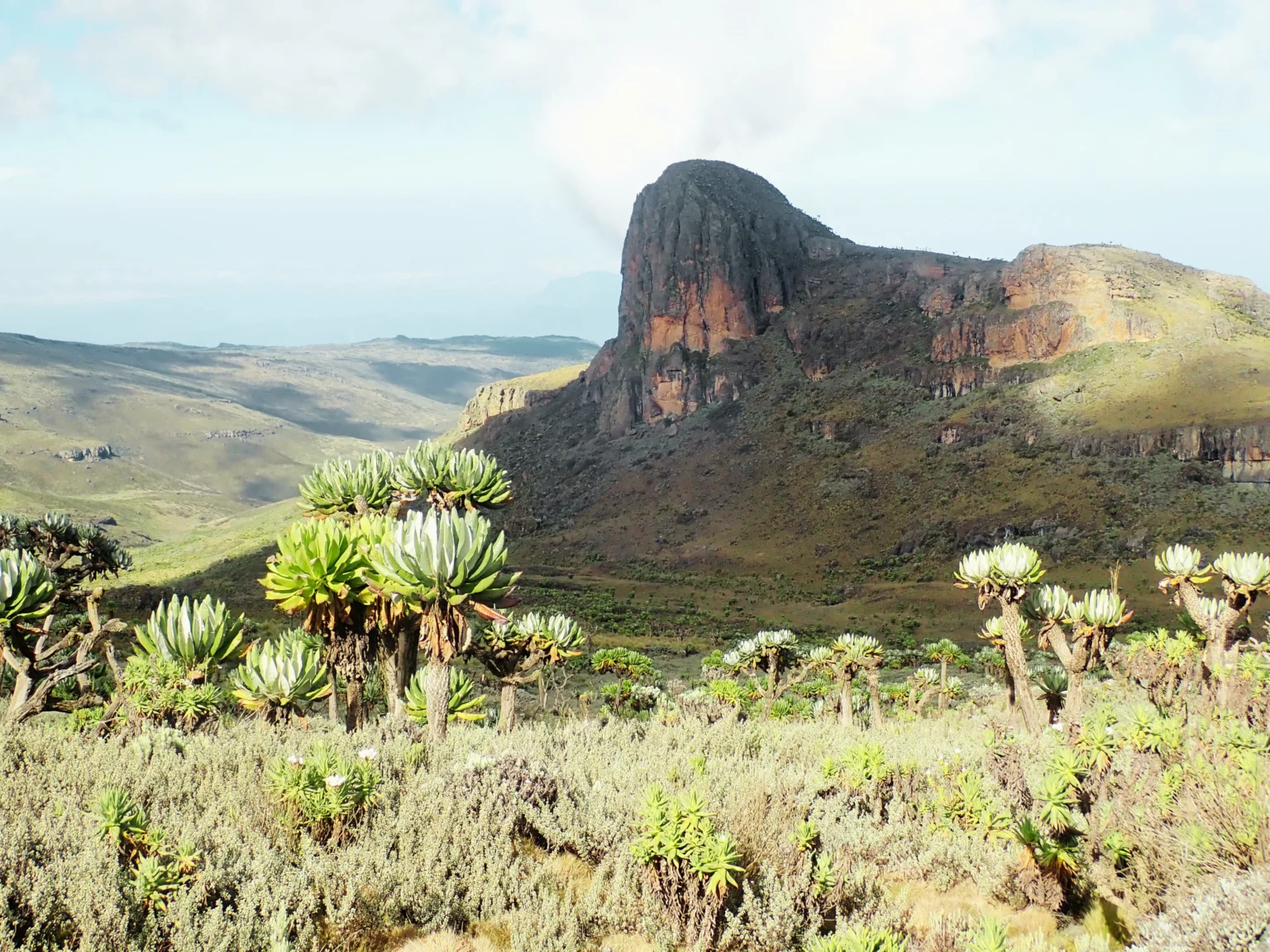
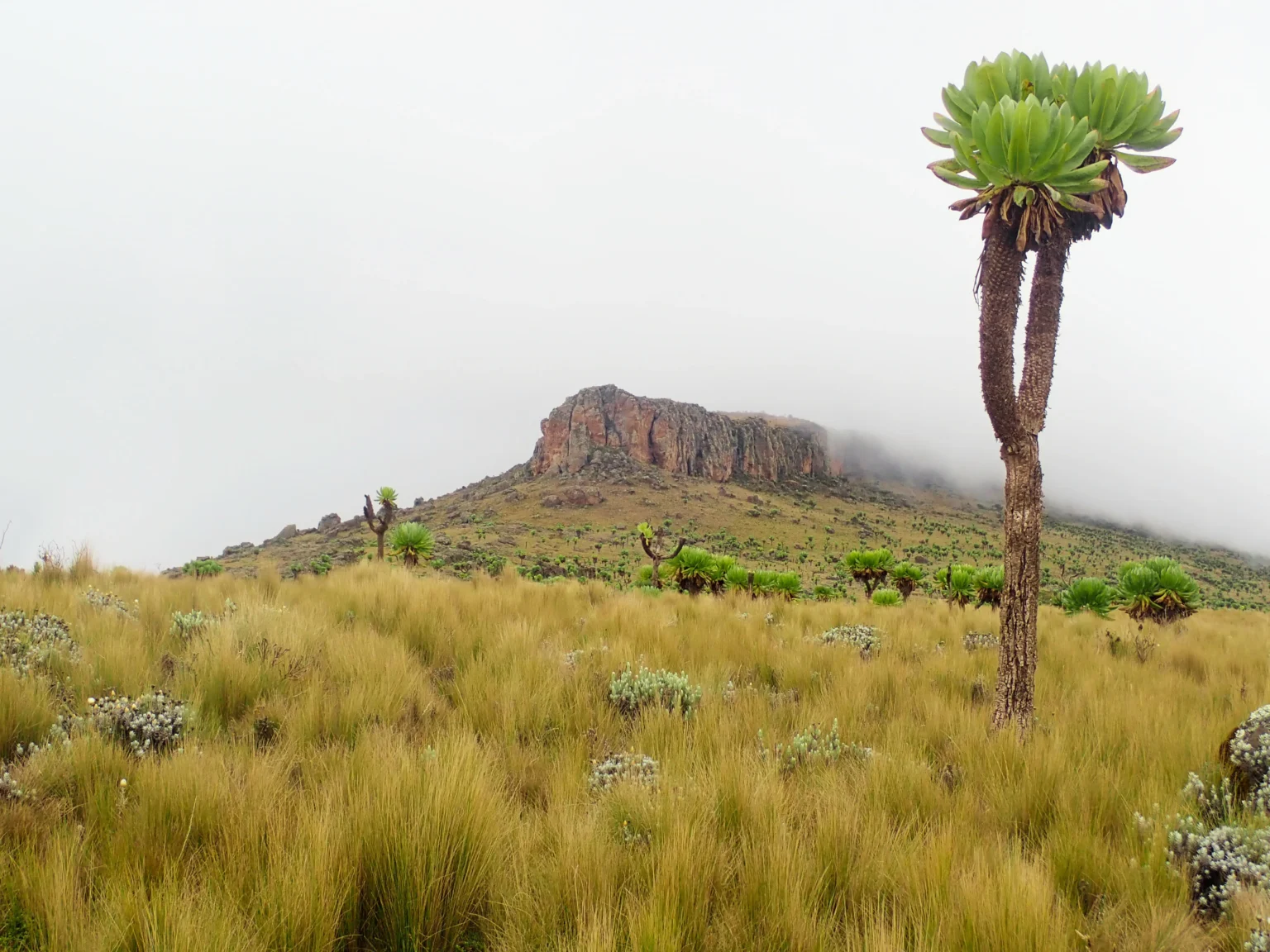
The second half of the day continues through montane forest, open bamboo stands now regenerating after years of community use, and the striking Giant Heather Zone — home to two heather species, one similar to those found in the Rwenzori Mountains and one from Mt Kenya. Masaba Camp sits in a sheltered valley next to a high rock — climb it for mobile signal to send updates home.
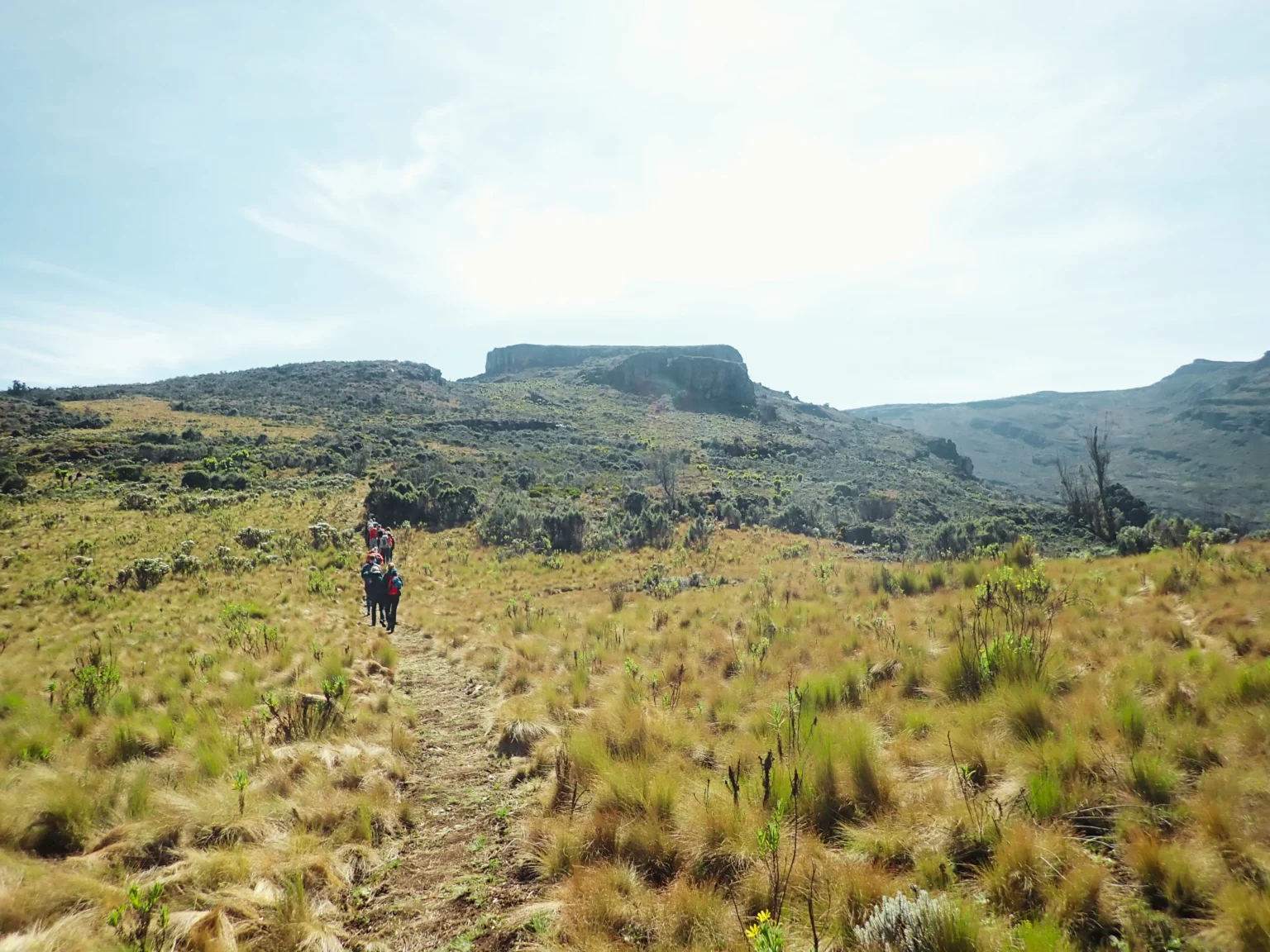
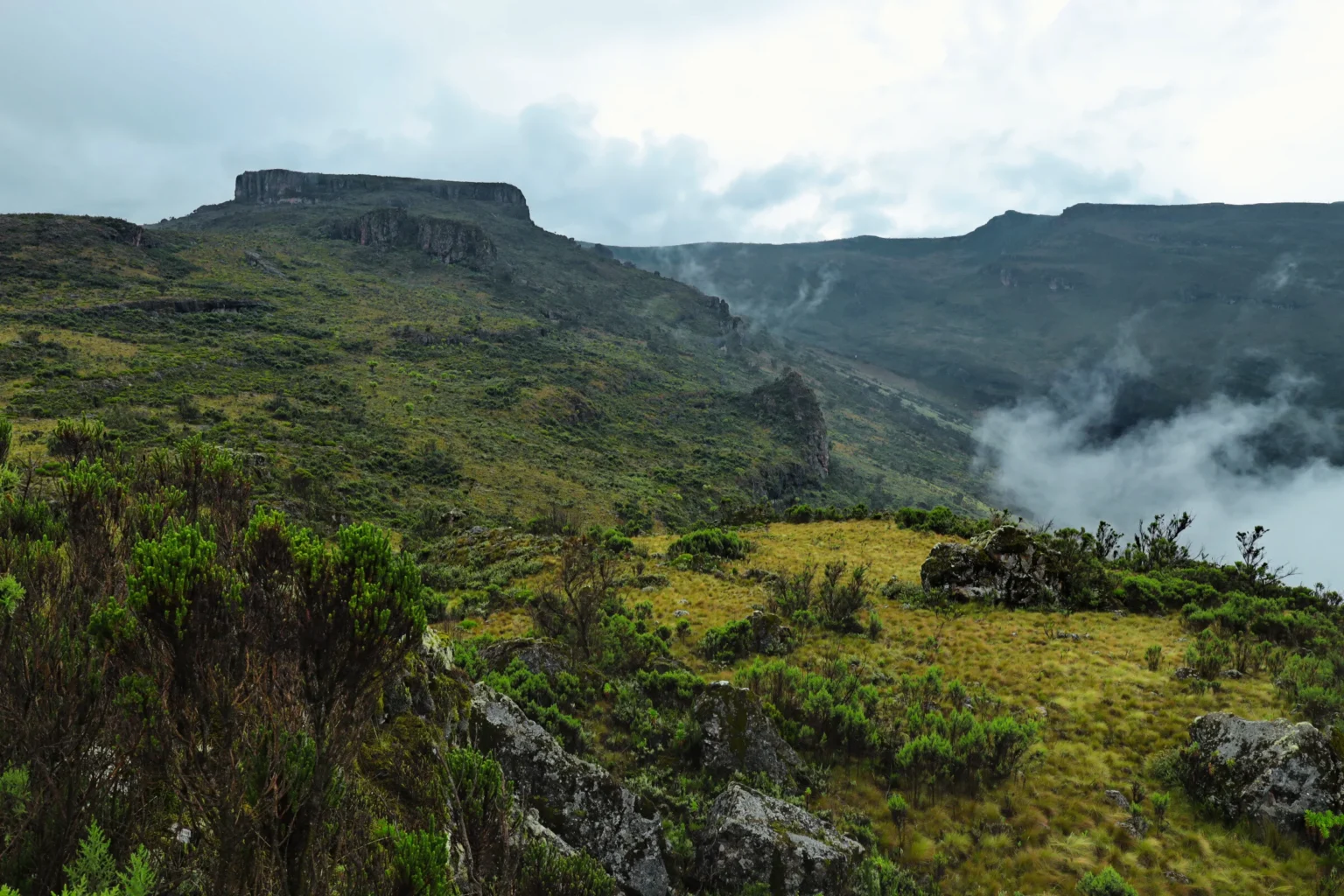
The day begins with a steady climb from Masaba Camp up to the rim of Masaba Table — a vast, flat-topped rock formation measuring 700 metres long by 200 metres wide, rising 80–100 metres above the surrounding alpine moorland with sheer cliffs on all sides. You walk the full length of the table, one of the most extraordinary geological features in East Africa, before descending and continuing along the caldera rim to Wagagai Peak at 4,321m, the highest point in Uganda and Mt Elgon.
After taking in the summit views across Uganda and Kenya, you begin the long descent — first to Mude Cave Camp (3,472m), then continuing down to Sasa River Camp (2,880m), or choose to stay at Mude Cave and descend on Day 3 morning.
Optional: Masaba Summit (4,152m). Just before the Wagagai approach, the trail passes close to the base of Masaba Summit. A short but steep scramble to this secondary peak rewards with dramatic views of the caldera and the Masaba Table below. This adds approximately 30–45 minutes to your summit day.
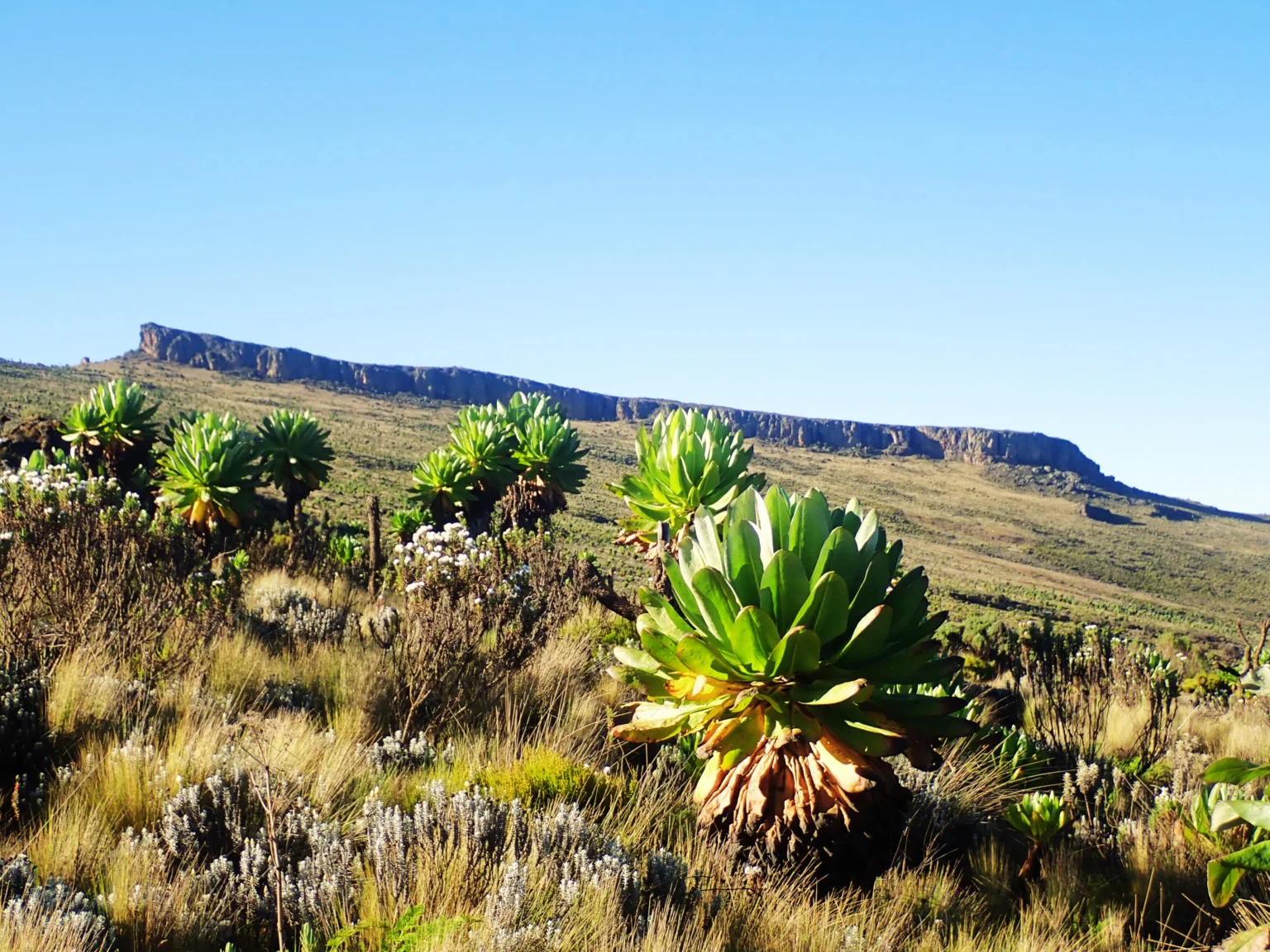
The final day is a satisfying descent through the montane forest, rejoining the upward trail just above the waterfalls before winding down through the community to Basecamp. Most trekkers who overnight at Sasa River Camp arrive back at Basecamp by noon; those sleeping at Mude Cave Camp typically arrive by 3pm.
The descent passes through the lush Dirigana Valley and offers the chance to appreciate the biodiversity of the montane forest at a more leisurely pace. Breakfast and a packed lunch are provided for the journey down.
Gallery
Highlights
What's Included
Practical Information
Day 1 is approximately 14km with 2,025m of altitude gain. An early start at Basecamp is non-negotiable — reaching Masaba Camp before dark requires a full day's hiking.
Severe headache, nausea, breathlessness at rest, confusion or loss of coordination are warning signs. If symptoms appear, descend immediately and inform your guide. Do not push through severe symptoms.
Drink at least 3 litres of water per day. Dehydration is the most common trigger for altitude sickness. Start drinking extra water the day before you begin the trek.
Masaba Camp reaches near-freezing temperatures at night. Bring a warm sleeping bag, thermal base layers, a fleece, a wind/waterproof shell, and gloves. Summit morning can be 2–5°C.
Staying in Mbale or at Rostow's Hotel in Sironko the night before allows an 8am arrival at UWA offices (52km from Mbale). The drive takes approximately one hour.
You can overnight at Sasa River Camp (2,880m) for a shorter Day 3, or at Mude Cave Camp (3,472m) to visit Dirigana Falls on the descent. Discuss with your guide based on energy levels.
Book your 3-day summit trek with Elgon Trekking Services — professional guides, great food, and a wilderness experience unlike anywhere else in East Africa.