

Your Professional Trekking Services
From the ancient Bamasaaba settlements high on the mountain slopes to the first European traversals of the caldera — the story of Elgon stretches back millennia.
One of the oldest Bantu tribes of Eastern Uganda, originally living high on the mountain slopes for protection from rival tribes.
Ancestors are believed to have migrated from the Ethiopian mountains, possibly linked to the Falashas (Ethiopian Jews) via Lake Turkana.
Settled in the upper reaches of the mountain above the caldera where game was plentiful and caves offered natural shelter.
Supplemented hunting with bamboo shoots — dried and smoked to preserve them through the off-season (available May to August).
Origins
The Bamasaaba are believed to be one of the oldest Bantu tribes of Eastern Uganda. Originally they lived high up on the slopes of Mt Elgon to avoid being attacked by other tribes in the area. Mt Elgon was a name given by European explorers around 1898; however locally it was known as Masaba.
They say that a man called Mundu (also known as Uzi), whose ancestors migrated from the Ethiopian mountains — where they may have been linked to the Ethiopian Jews called Falashas — travelled via Lake Turkana and settled in the upper reaches of Mt Elgon above the caldera, where game was plentiful and caves were many. It was from here that they lived by hunting, and also ate bamboo shoots which were dried and smoked to preserve them, as the shoots are seasonal from May to August.
Mundu had two sons, Masaba and Kundu, and lived in a large cave at the base of Masaba Peak (known today as Jackson's Summit). Masaba was strong and became a leader, producing three sons — Mwambu, Mubuuya and Wanale — and two daughters, Natuyi and Seera. These three sons became the founders of the three main clans of Bamasaaba.
The mountain was not merely a refuge — it was the cradle of an entire civilisation. Its slopes, caves and forests sheltered generations before the outside world ever knew it existed.
— Oral tradition of the Bamasaaba peopleLineage
Mwambu
First SonThe eldest son of Masaba, Mwambu moved from the mountain and established his people in the fertile lowlands of Sironko, Bulambuli and the Butandiga Ridge — forming one of the three foundational clans.
Sironko · Bulambuli · Butandiga Ridge
Mubuuya
Second SonMubuuya, the second son, moved his clan to Bududa and Namisindwa in Uganda, and as far as Kitale across the border in Kenya — evidence of the broad reach of the early Bamasaaba diaspora.
Bududa · Namisindwa · Kitale (Kenya)
Wanale
Third SonWanale, the youngest of the three sons, moved to the Wanale Ridge and the area where Mbale City now stands — a name and a presence that endures in the landscape to this day.
Wanale Ridge · Mbale City
Of the Daughters
Natuyi
Given to Masaba's head herdsman as a reward for his exceptional dedication and loyalty — a mark of the highest honour in the community.
Seera
Moved away from the mountain to an unknown location — her story lost to history, though her name lives on in oral tradition.
Cultural Tradition
Masaba met a beautiful Mutwa (Masai) girl named Nabarwa and asked for her hand in marriage. However, when he was introduced to her family, they insisted that to marry her, he must be circumcised — to which he agreed. This is said to be the origin of the ritual of circumcision amongst the Bamasaaba, known as Imbalu.
Masaba's brother Kundu, however, did not accept this idea and hid in a small cave until he managed to escape the mountain entirely. His departure set him on an extraordinary journey that would shape the history of an entire kingdom to the west.
Imbalu
Imbalu — the male circumcision rite — remains one of the most important cultural ceremonies of the Bamasaaba people to this day, celebrated every two years in a cycle that has continued for generations.
Migration & Legacy
Refusing circumcision, Kundu hid in a cave and then fled westward accompanied by Mukhama and Simela, leaving the mountain for good.
The group crossed the Nile River and arrived in the area now known as the Buganda Kingdom, finding signs of earlier inhabitants who had since moved on.
Continuing west, the group settled at the Rwenzori Mountains where they multiplied. But a dispute over leadership arose — Mukhama claimed authority, which Kundu would not accept.
Kundu returned to Buganda and changed his name to Kintu. Later Simela joined him. Together with others, they multiplied and founded the Buganda Kingdom — one of East Africa's most powerful historical kingdoms.
Key Figures
European Exploration
The Masai called the mountain Elgonyi — as seen from Masailand. The Scottish explorer Joseph Thomson used a simplified version of this name that has endured to this day. Here are the key expeditions that brought Mt Elgon to the attention of the wider world.
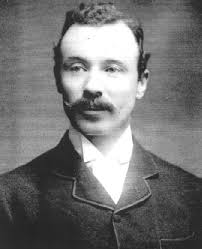
Joseph Thomson
The Scottish explorer Joseph Thomson explored the southern side of Elgon in 1883, becoming the first European to document the mountain. Unable to pronounce the Masai name Elgonyi, he anglicised it to Mt. Elgon — the name that has endured ever since.
Scottish · Southern Elgon · Named the Mountain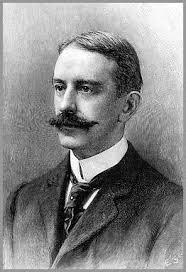
Frederick Jackson
Later Sir Frederick Jackson, he led the 1890 expedition that traversed the caldera from north to south — the first Europeans to do so. He also became the first European to climb Masaba Peak, today named Jackson's Summit in his honour.
First Caldera Traverse · First Ascent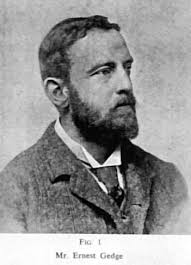
Ernest Gedge
Ernest Gedge accompanied Jackson on the 1890 traverse of the caldera from north to south, making him one of the two first Europeans to cross the ancient crater of Mt Elgon — a feat of exploration that opened the mountain to the wider world.
First Caldera Traverse · 1890 ExpeditionThe Mountain's Names
Masaba — the original local name, honouring the great patriarch. Elgonyi — the Masai name as seen from their lands to the east. Mt Elgon — the European anglicisation that arrived with Joseph Thomson in 1883 and became the internationally recognised name around 1898.
The same slopes where the Bamasaaba built their first settlements, where Mundu hunted and Masaba led — you can walk them today. Join us on a trek through living history.